

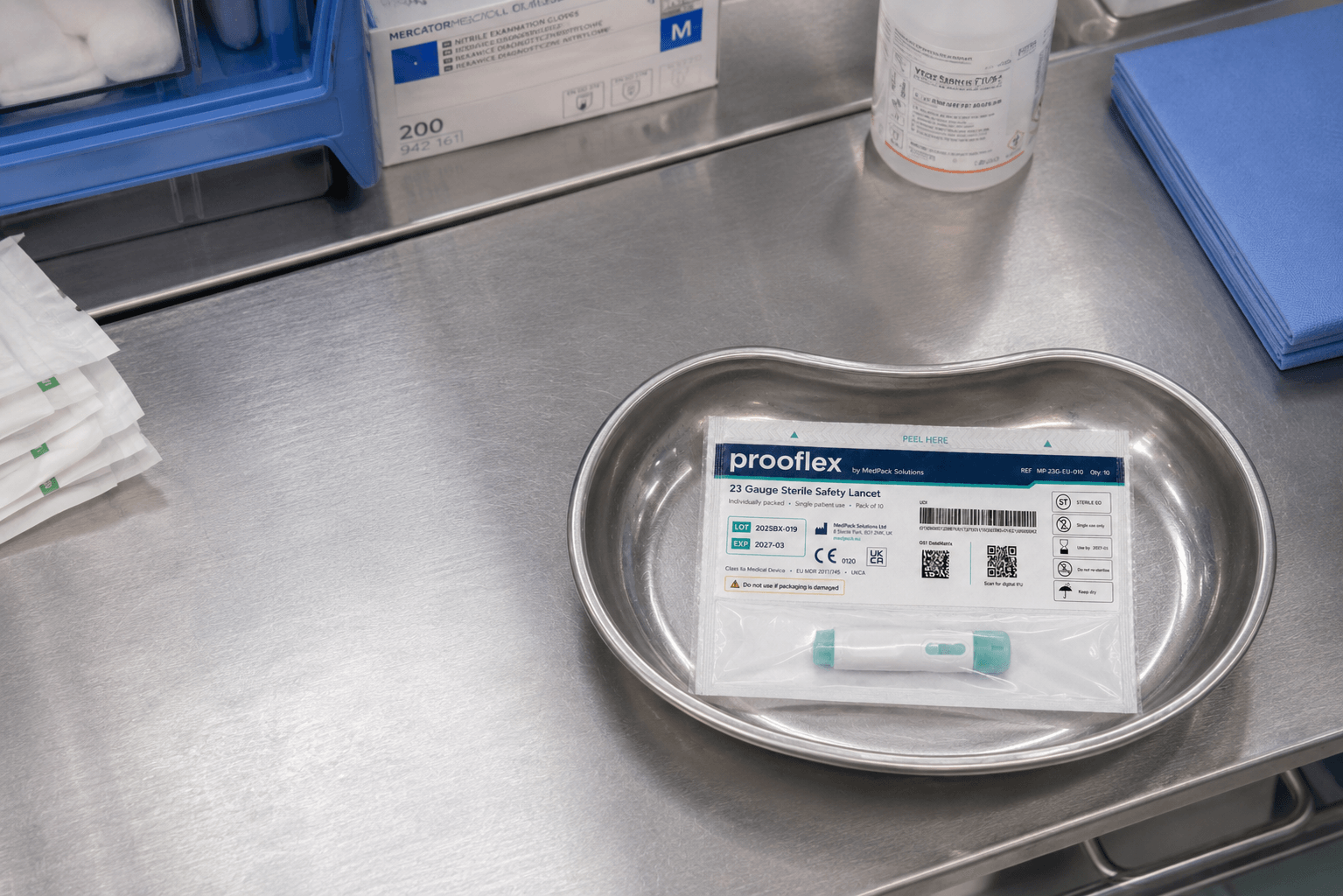







Device labeling errors are among the most common root causes of field safety corrective actions. The challenge isn't knowing the requirements — it's maintaining accuracy across IFUs, labels, and UDI carriers through every revision, every translation, and every market.
IFU documents are revised frequently, and each revision carries the same risk: the comparison runs against the previous version, not the approved master. What changed by accident is invisible alongside what changed by intent.


UDI must appear on every packaging level — unit, intermediate, and case — and all three must be consistent. Language requirements vary by market, symbols must match the current ISO standard, and a manual review process handles that complexity inconsistently.


Device release typically involves separate review steps for label, IFU, and UDI carrier — run by different teams using different tools. When a notified body asks for the complete release record, someone assembles the evidence from three separate workflows.


The approved master IFU, DFU, or device label is the authoritative source — regardless of which authority it is filed with. Every language version, artwork update, and print run is verified against it.

IFUs and labels are translated for each market your device is registered in. External translation agencies handle the work — but verifying their output falls to your team, across every language version.
Each translated version is compared against the approved master. Your reviewers do not need to read the language being checked — the comparison is language-independent, including right-to-left and pictorial scripts. All versions in the same session.
Device labeling symbols, image placement, and layout accuracy are verified pixel by pixel. Visual changes that a reviewer scanning quickly would miss are flagged automatically, across all format variants and market adaptations.
UDI barcodes are graded to full ISO/IEC standards. Not just confirmed as scannable, but validated dimensionally against the packaging specification.
Your regulatory and QA teams work through flagged deviations, record their decisions, and apply electronic signatures. The audit trail builds itself as they work. Tamper-proof, timestamped, and compliant with electronic records requirements across major regulatory frameworks.
Printed device labels or packaged samples are scanned and compared against the approved digital file from any site, using any standard scanner. Teams in different locations can do this simultaneously without proprietary hardware or sample shipping.
All inspection results captured in a single electronically signed Comparison Report. Defensible in any regulatory inspection, stored in the platform for whenever you need it.

Real teams, real deadlines, real compliance stakes. Here's how Content Compare fits into their process.

Detects every text change across any language, format or script. Nothing missed.

Pixel-by-pixel artwork comparison across file formats. Every visual deviation flagged.

Scanned physical prints compared against the approved digital file.

Every barcode decoded, graded to ISO/IEC standard, and every Braille element verified.




Common questions from medical device quality and regulatory teams.


