

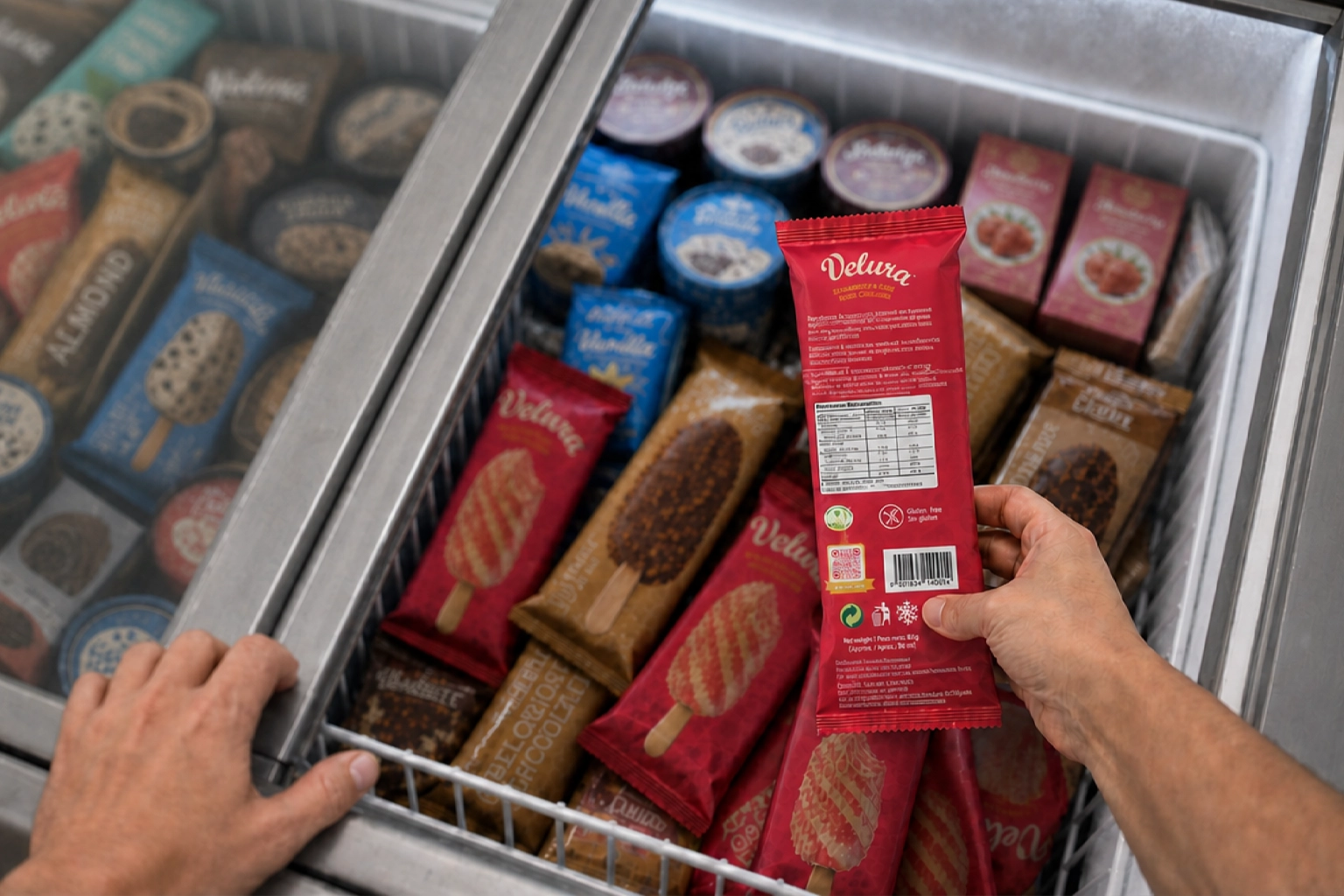







Undeclared allergens are the leading cause of food recalls globally — not because teams don't know the rules, but because multilingual, multi-SKU review processes have structural blind spots. These are the errors that reach the shelf.
Each language version is reviewed independently — allergen compliance checked in isolation, not against the other versions. An allergen correctly declared in English can be missing its required highlight in French or absent entirely in German.


A formulation change, a regulatory update, a nutritional revision — each needs to propagate correctly across every affected SKU and every market version. Manual tracking of which variants have been updated, and which haven't, is where things fall through.


A label error caught at proof stage isn't just a quality event — it's a project event. Revision cycle, new artwork, new approval, new proof: weeks added to a launch timeline that was already tight.


Claims, allergen statements, nutritional information, ingredients, brand guidelines. The approved source comes together from multiple teams, and every artwork version is verified against it.

Pack sizes, market variants, retailer-specific formats, seasonal editions. The volume adds up quickly, and checking each one manually against the approved copy is where errors creep in.
Every text element across every variant is compared against the approved source. Allergen statements, nutritional tables, promotional claims, ingredients lists, regulatory copy. All language versions in the same session.
Logo placement, color accuracy, image integrity and visual consistency across all SKUs and retailer adaptations are verified pixel by pixel. Brand drift that looks fine on a monitor shows up clearly here.
Every barcode is graded to full ISO/IEC standards, including dimensional validation. GS1 compliance is confirmed, and the grading data your print suppliers and trading partners need is generated in the same session as everything else.
Every change against the approved master is surfaced — INN spelling, dosage strength, storage temperatures. Nothing slips between versions.
Printed samples or press proofs are scanned and compared against the approved artwork from wherever your teams are. No sample shipping, no waiting. Just a scan and a result.
All inspection results in a single signed report. A complete, defensible record of the verification process and one less thing to worry about before the production run starts.

Real teams, real deadlines, real compliance stakes. Here's how Content Compare fits into their process.

Detects every text change across any language, format or script. Nothing missed.

Pixel-by-pixel artwork comparison across file formats. Every visual deviation flagged.

Scanned physical prints compared against the approved digital file.
Every barcode decoded, graded to ISO/IEC standard, and every Braille element verified.




Common questions from FMCG and consumer goods teams.

